








19 October, 2025
CEO of the National Communication Centre Meets “Qeyadat” Program Participants and Affirms that the Government Communication System Is a Key Driver of Sustainable Development
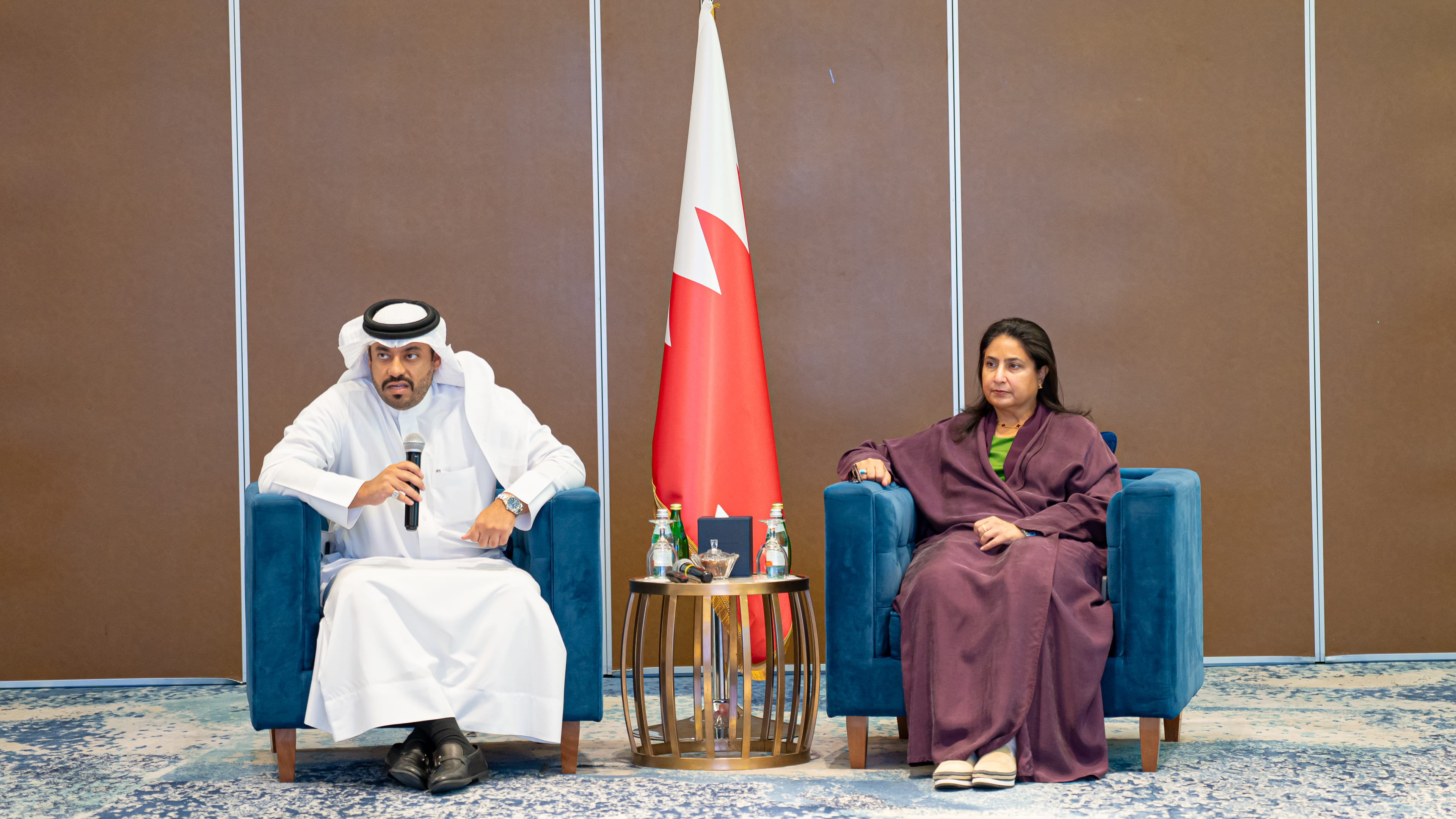
Her Excellency Dr. Shaikha Rana Bint Isa Bin Duaij Al Khalifa, Director General of the Institute of Public Administration, emphasized the importance of equipping government leaders, directors, and those of equivalent ranks with advanced skills that enable them to engage effectively with various official media platforms. She noted that such skills contribute to strengthening the Kingdom of Bahrain’s visibility and leadership at the local and international levels.
This came during the dialogue session organized by the Institute of Public Administration, attended by the Director General and Mr. Ahmed Khaled Al Arifi, CEO of the National Communication Centre, with the 35th cohort of the Executive Leadership Development Program “Qeyadat,” which is delivered by the Institute for public sector directors as part of the National Leadership Development Program.
The Director General explained that including a communication and influence module within the Qeyadat Program reflects the Institute’s belief in the importance of empowering participants to use modern tools and methodologies to analyze media discourse and evaluate its impact on institutional reputation. She affirmed the Institute’s commitment to diversifying learning methods such as practical training and simulation to help participants gain professional skills in dealing with media and representing their institutions effectively, while highlighting Bahrain’s achievements in regional and international forums.
For his part, Mr. Ahmed Khaled Al Arifi, CEO of the National Communication Centre, emphasized that continued investment in developing government leaders is a strategic pillar for achieving excellence in Bahrain’s government communication system. He noted that building leadership capabilities across various sectors, capable of engaging flexibly with integrated communication plans, contributes to strengthening the national communication framework in line with a comprehensive vision that highlights Bahrain’s achievements, projects, and aspirations—positioning communication as a key driver of sustainable development. He also praised the Institute’s efforts to incorporate government communication elements into its programs, supporting the Centre’s mission in this domain.
During the session, the CEO elaborated on the Centre’s role in enhancing partnership and integration among communication departments across government entities and promoting a “Team Bahrain” spirit to reinforce effective communication based on transparency, professionalism, and creativity. He affirmed that the National Communication Centre will continue its efforts to develop communication skills and enhance the readiness of national talent, contributing to strengthening the communication sector and promoting Bahrain’s positive image and national achievements across all fields.
It is worth noting that this session is part of a series of dialogue meetings organized by the Institute of Public Administration with distinguished government leaders within the “Qeyadat” Program. These sessions aim to share accumulated expertise from different sectors, highlighting the importance of collaboration among government institutions in developing national capabilities and achieving the program’s objectives of preparing leaders equipped with strategic skills that support national plans and enhance institutional efficiency.
Share this page:


Content last updated: 5 November 2026